

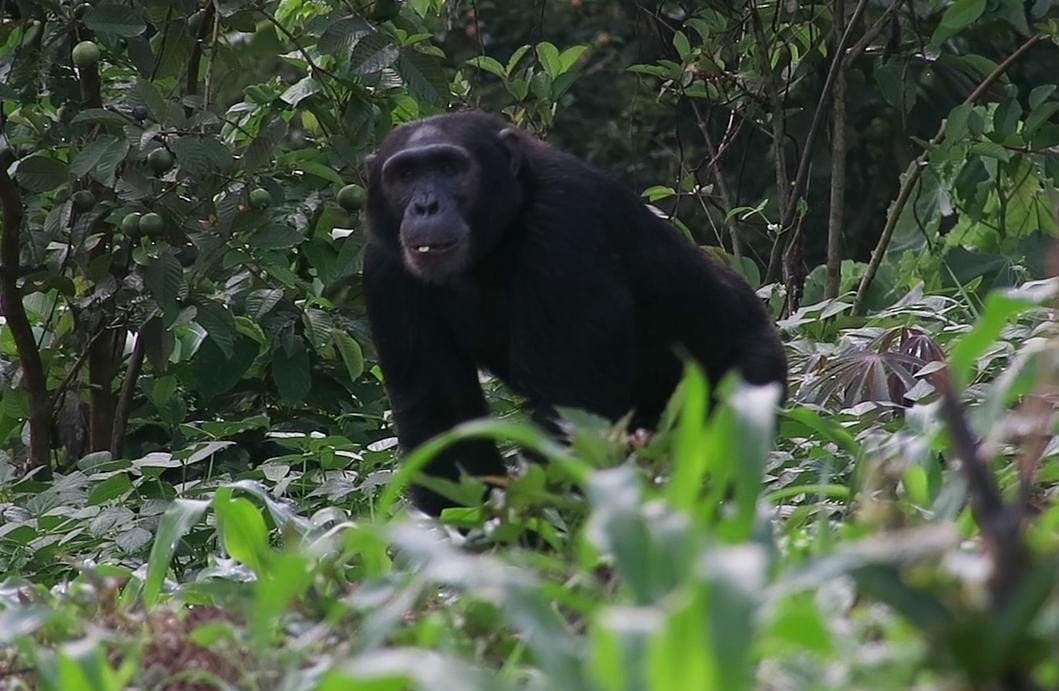
For decades, the villages of Muhorro in Kagadi District lived in fear. Chimpanzees from the nearby Katyobona Forest would emerge without warning—raiding gardens, clashing with residents, and, in the most tragic cases, attacking children.
The conflict left deep scars. More than 80 people were injured, six children lost their lives, and several chimpanzees were killed in retaliation.
But today, something remarkable has changed.
The violence has largely subsided. And while fear has not completely disappeared, it has softened into understanding.
This transformation did not happen by chance. It is the result of deliberate interventions spearheaded by the Cross-Cultural Foundation of Uganda (CCFU).
The origins of the conflict trace back to 1991, when a local man captured a baby chimpanzee for spiritual purposes. What followed became a story still told in hushed tones across the community.
Chimpanzees retaliated. They attacked the man’s home—and took a human child.
To many villagers, the act felt deliberate, almost symbolic. As Swaleh Kuteesa Kadoma recalls, it was as though the chimpanzees were saying: “Bring back my baby, and I will return yours.”
When that did not happen, the situation escalated. The child was killed, and from that moment on, a cycle of violence took hold—humans attacking chimpanzees, and chimpanzees retaliating.
Over the years, the problem worsened. The shrinking forest—once a vast 3,000-hectare corridor connecting Kibale, Tooro-Semuliki, and Budongo ecosystems—pushed wildlife closer to human settlements, intensifying encounters.
“As you know, chimpanzees—if you are harsh to them—they retaliate in the same way,” says Kadoma.
At the center of this change is Swaleh Kuteesa Kadoma, a former national-level boxer and founder of Friends of Chimpanzee Family, whose life took an unexpected turn.
Driven by personal experience and what he describes as a spiritual calling, Kadoma began to see chimpanzees not as enemies, but as part of a shared existence.
“We decided to befriend chimpanzees. We chose a name that would bring everyone on board—Friends of Chimpanzee Family,” he explains.
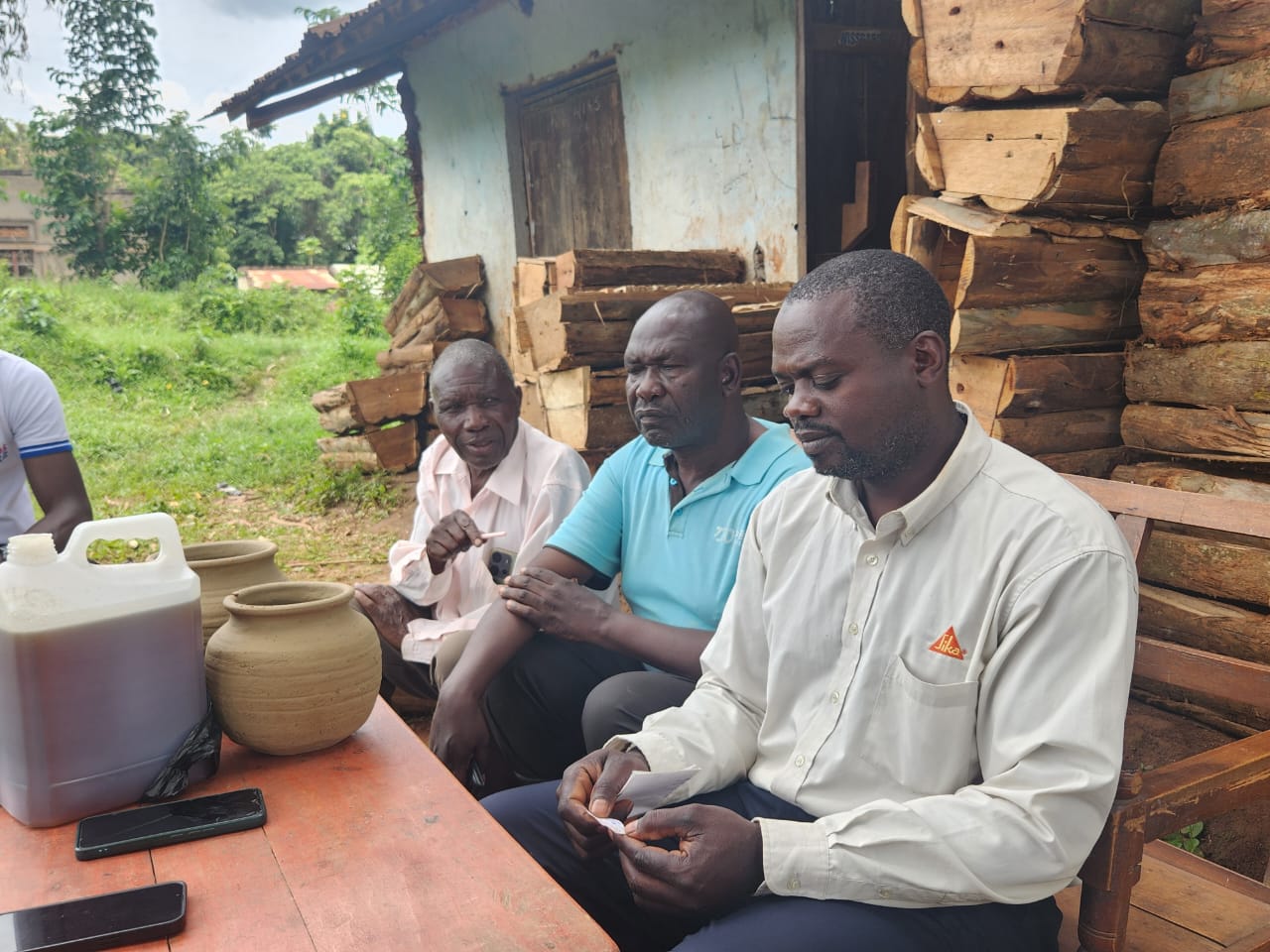
With that vision, he and others founded a grassroots organization aimed at ending the violence. Their idea was simple but radical: change how people think about chimpanzees.
The real shift began when CCFU stepped in.
In a bid to provide alternatives for poachers, the organization trained community members, funded small initiatives, and helped transform local passion into structured conservation work.
“All we have is the Cross-Cultural Foundation of Uganda,” Kadoma says. “They saw our courage and said, ‘Let us support you with what we can.’”
Through workshops, exposure visits, and dialogue meetings across Uganda, community members began to understand that coexistence was possible.
They also learned practical strategies—such as keeping children within sight while farming, after discovering that unattended, crying infants could attract chimpanzees.
Kadoma explains that one of the biggest breakthroughs came from addressing the root cause of the conflict: survival.
Many who hunted chimpanzees were simply trying to make a living. The solution, therefore, was not punishment—but alternatives.
With support from CCFU, the community introduced several income-generating activities, including beekeeping for honey production, pottery and craft-making, and tree planting and forest restoration.
These initiatives have helped former poachers transition into conservation roles.
“If you want a poacher to stop, give him a goat or a pig,” Kadoma explains. “Slowly, they begin to change.”
Today, some of the strongest defenders of chimpanzees are former hunters.
The community has also turned its focus toward restoring the environment itself.
Katyobona Forest, once a vital wildlife corridor, had been heavily degraded. Without it, chimpanzees were forced into villages in search of food.
To address this, residents began replanting trees, protecting remaining forest patches, and promoting the use of indigenous species that provide food for wildlife.
“Let us restore with trees that chimpanzees can eat from,” Kadoma urges, warning against monoculture plantations like eucalyptus, which offer little ecological value.
Through CCFU-supported training, the Friends of Chimpanzee Family now promote intercropping cocoa with native trees, protecting wetlands as wildlife corridors, and supporting private forest owners to conserve land.
As CCFU marks 20 years of work in Uganda, the people of Muhorro remember the organization as a force for peace—helping restore both cultural values and ecological balance.
“Chimpanzees still roam the community. Occasional incidents still occur. But people no longer respond with violence,” Kadoma says.
“Mindsets have changed. Even when chimpanzees injure someone, communities do not take up spears and pangas to kill them.”
That shift—from revenge to restraint—may be the greatest success of all.
In Bunyoro, chimpanzees are seen as more than animals. For many, they are part of cultural identity—even spirituality.
Kadoma himself speaks of visions that shaped his path and deepened his commitment.
“A chimpanzee, to us, is a spirit. It must have someone to speak for it—and that is me, and the members of Friends of Chimpanzee Family,” he says.
Still, challenges remain.
The group is calling for greater support from government agencies, particularly the Uganda Wildlife Authority (UWA) and the National Environment Management Authority (NEMA), to help preserve forest catchments and ensure a sustainable habitat for chimpanzees.
Kadoma also highlights the dangers caused by limited access to clean water. In some cases, humans and chimpanzees compete for the same water sources, increasing the risk of conflict.
He urges authorities to provide piped water to communities to reduce these tensions.
There is also concern about ongoing oil projects, which have led to forest clearance and could disrupt the fragile balance that has taken years to rebuild.
For now, however, Muhorro stands as a powerful example.
A place once defined by fear is slowly learning coexistence—where humans and chimpanzees, though still wary of one another, are finding a way to share the same land.
